
Sertraline
| Sertraline | |
|---|---|
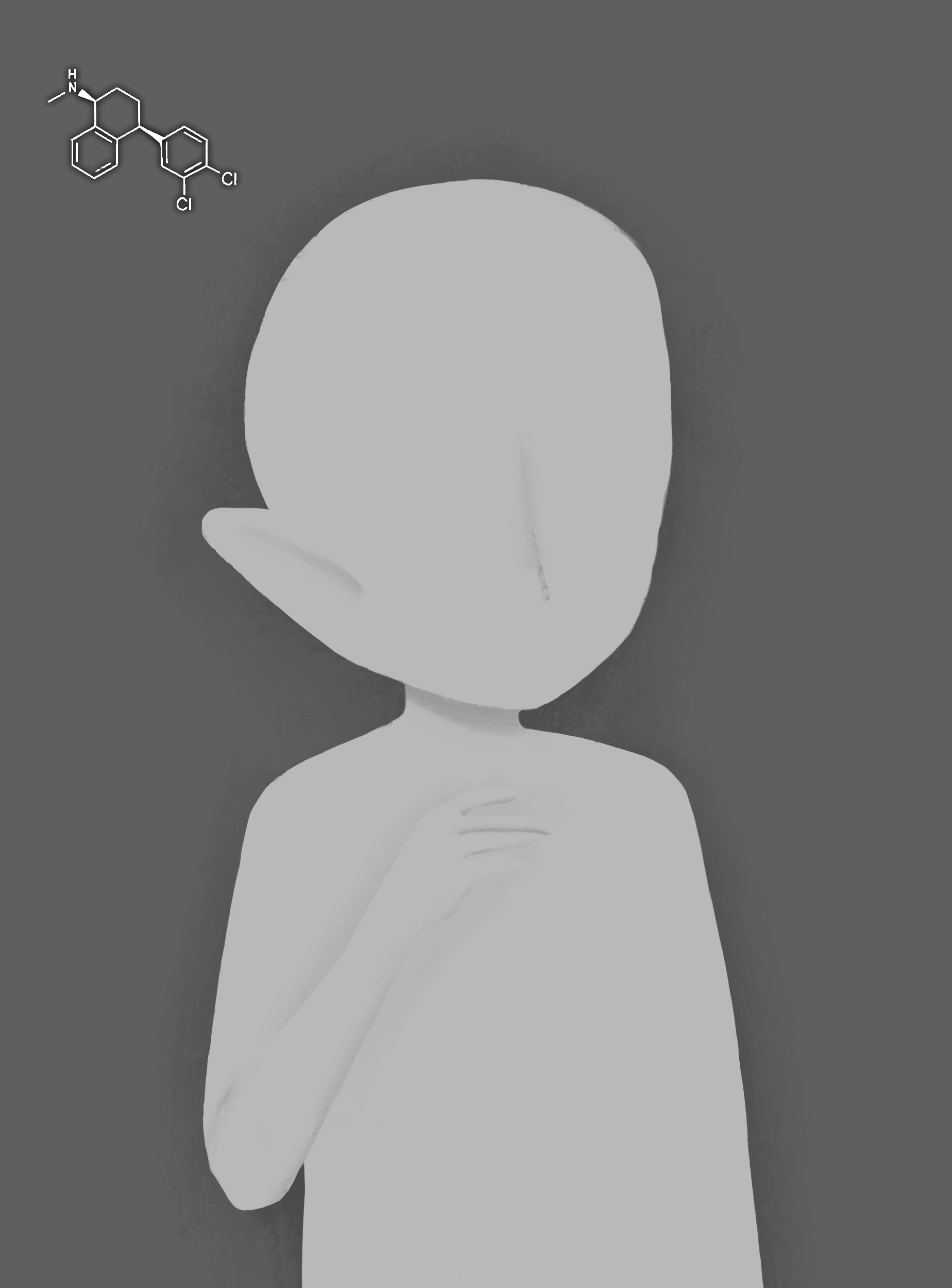 | |
| Molecule | C17H17CI2N |
| Compound | Sertraline |
| Era | Ancient |
| Origin | The US |
| Archetype | Freetekno |
| Ancestor | Greek |
| Swag Score | 2 |
| Date Added | 2025-01-12 |
[view source]Effects & Properties
Effects: Treats major depressive disorder, generalized anxiety disorder, panic disorder, social anxiety disorder, obsessive-compulsive disorder, and post-traumatic stress disorder. It may also be used for premenstrual dysphoric disorder. Typically improves mood, reduces anxiety, and fewer intrusive thoughts after 4-8 weeks of treatment (with doses of 50-200mg/day orally). It gradually stabilizes mood by enhancing serotonin signaling. Physically can cause nausea, diarrhea, insomnia, headache, fatigue, and sexual dysfunction.
Natural Occurrence: Sertraline does not occur naturally, it is manufactured in laboratories through chemical synthesis.
[view source]History
Sertraline was developed by Pfizer chemists Reinhard Sarges and Kenneth Koe in the early 1980s as part of the new wave of selective serotonin reuptake inhibitors (SSRIs). It received FDA approval in 1991 and was marketed as Zoloft, quickly becoming one of the most prescribed antidepressants in the world. By the 2000s, sertraline had become a cultural touchstone of modern mental health treatment, prescribed to millions for depression, anxiety, OCD, and PTSD, and its ubiquity reflects the broader pharmaceutical revolution in how society addresses emotional suffering.
[view source]Connections
Archetype: Freetekno
Ancestor: Greek
Tarot Card: Four of Cups
PubChem: Sertraline
Paired With: St. John's Wort