
Psychotria Viridis
| Psychotria Viridis | |
|---|---|
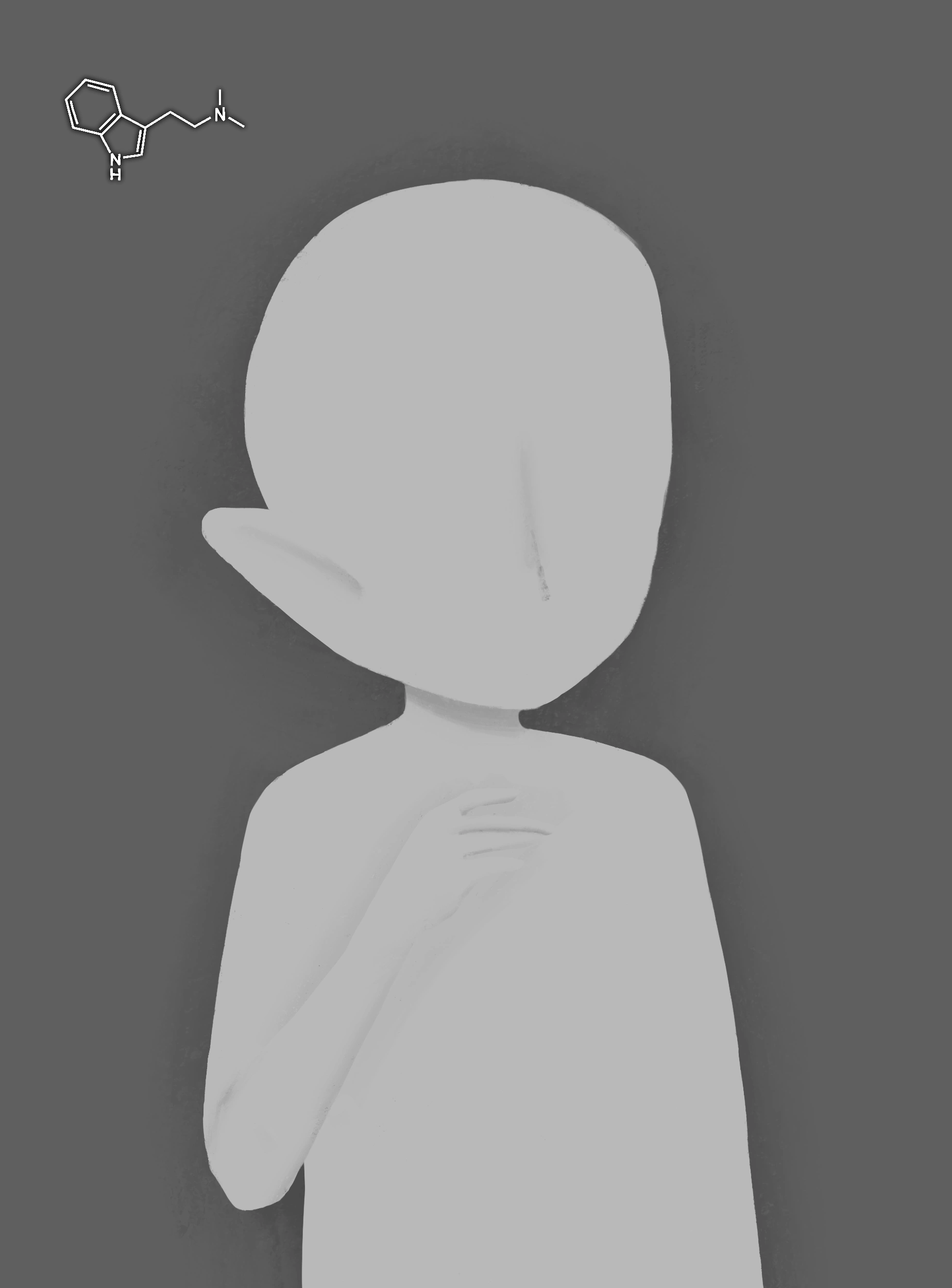 | |
| Molecule | C12H16N2 |
| Compound | N,N-Dimethyltryptamine |
| Era | Ancient |
| Origin | Amazon Basin |
| Archetype | Freetekno |
| Ancestor | Native American, Mayan |
| Swag Score | 3 |
| Date Added | 2025-01-12 |
[view source]Effects & Properties
Effects: Vivid hallucinations, altered perception of time and space, and emotional introspection. The effects are rapid and intense. Risks include psychological distress, and a rare psychotic episode in predisposed individuals.
Natural Occurrence: Native to Central and South America, the shrub contains DMT in its leaves at concentrations of 0.1–0.61% by dry weight, with higher levels in the morning. It grows in humid rainforest, often in fertile, limestone-rich soils up to 150 meters altitude. Appearance: The plant is a shrub between 1,5 to 5 meters tall, with glossy dark green elliptic leaves, small white flowers, and red to purple berries. Dried leaves are grayish or reddish brown.
[view source]History
Psychotria viridis (chacruna) has been used by Indigenous Amazonian peoples for centuries as the primary DMT-containing ingredient in ayahuasca brews, combined with the MAO-inhibiting Banisteriopsis caapi vine. The plant's role in ayahuasca was first documented by Western ethnobotanists in the mid-20th century, notably by Richard Evans Schultes and later by the Ethnobotanical Stewardship Council. Chacruna has become central to the global ayahuasca movement that emerged from the 1990s onward, with ayahuasca retreat centers proliferating across South America and beyond, attracting spiritual seekers and researchers studying its potential for treating depression and PTSD.
[view source]Connections
Archetype: Freetekno
Ancestor: Native American, Mayan
Tarot Card: Page of Cups
PubChem: N,N-Dimethyltryptamine
Paired With: Datura