
Mucuna Pruriens
| Mucuna Pruriens | |
|---|---|
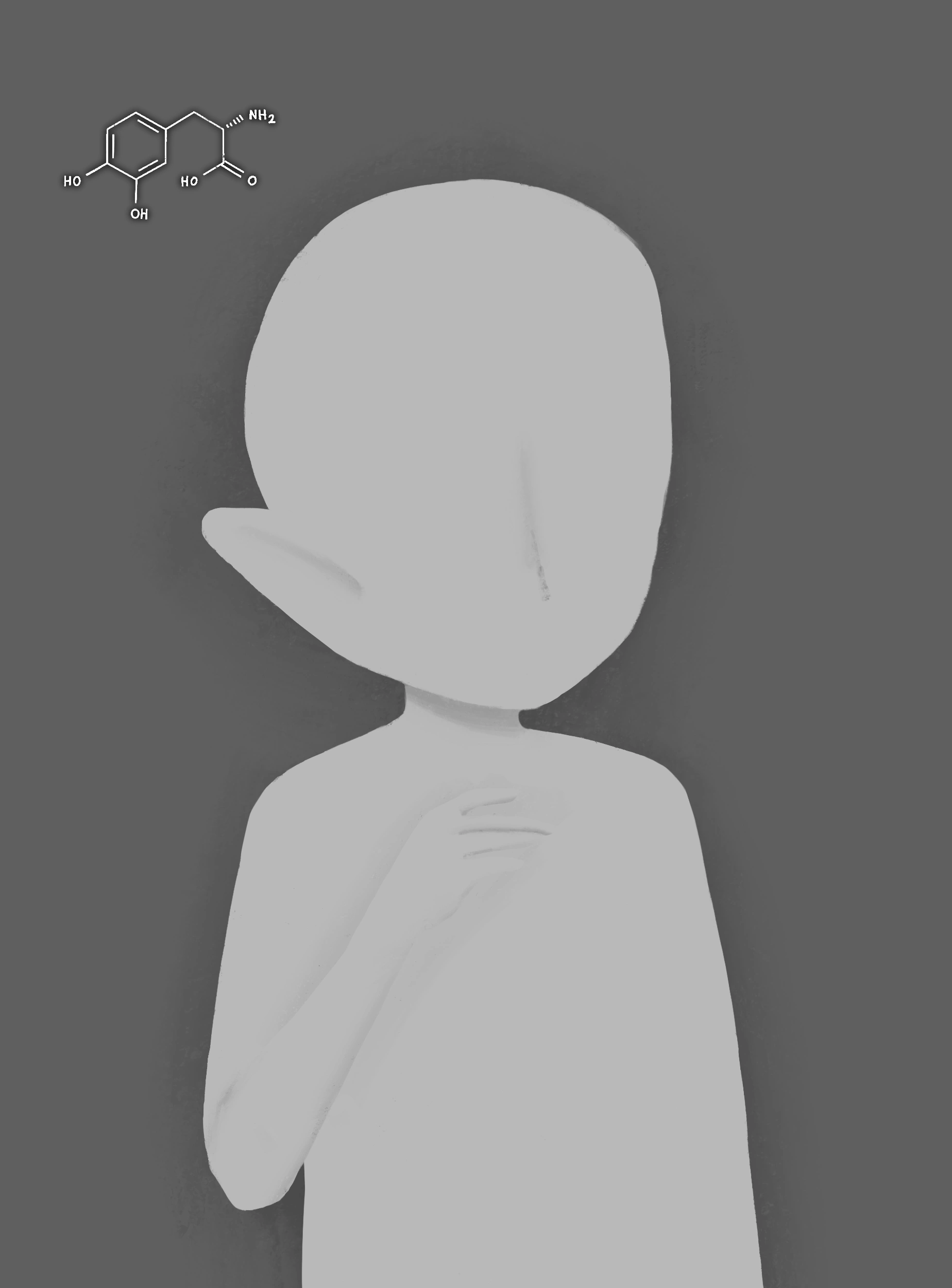 | |
| Molecule | C9H11NO4 |
| Compound | Levodopa |
| Era | Ancient |
| Origin | South America, Africa, Asia |
| Archetype | Acidhouse |
| Ancestor | Hindu |
| Swag Score | 5 |
| Date Added | 2025-01-12 |
[view source]Effects & Properties
Effects: Mild mood elevation, improved motivation, and enhanced mental clarity due to increased dopamine. The effects are subtle.
Natural Occurrence: Native to tropical regions of Africa, Asia, and Caribbean, this climbing legume grows in forests and disturbed areas. Traditionally used in Ayurveda for nervous system disorders, male infertility, and vitality. Appearance: Tropical vine growing from 3-18 meters tall, with green trifoliate leaves, purple or white flowers, and fuzzy brown seed pods covered in irritating hairs. Dried seeds are dark brown to black, shiny, and ground into a brownish powder.
[view source]History
Mucuna pruriens (velvet bean) has been used in Ayurvedic medicine for over 3,000 years, described in ancient texts as a treatment for Kampavata (a condition resembling Parkinson's disease), male infertility, and general vitality. It is one of the richest natural sources of L-DOPA, the direct precursor to dopamine, which was confirmed by modern pharmacological research in the 1930s. The plant's L-DOPA content (3-6% in seeds) has attracted growing scientific interest for its potential in treating Parkinson's disease and as a natural mood enhancer, and it has become a popular supplement in the biohacking and nootropics communities.
[view source]Connections
Archetype: Acidhouse
Ancestor: Hindu