
Ibogaine
| Ibogaine | |
|---|---|
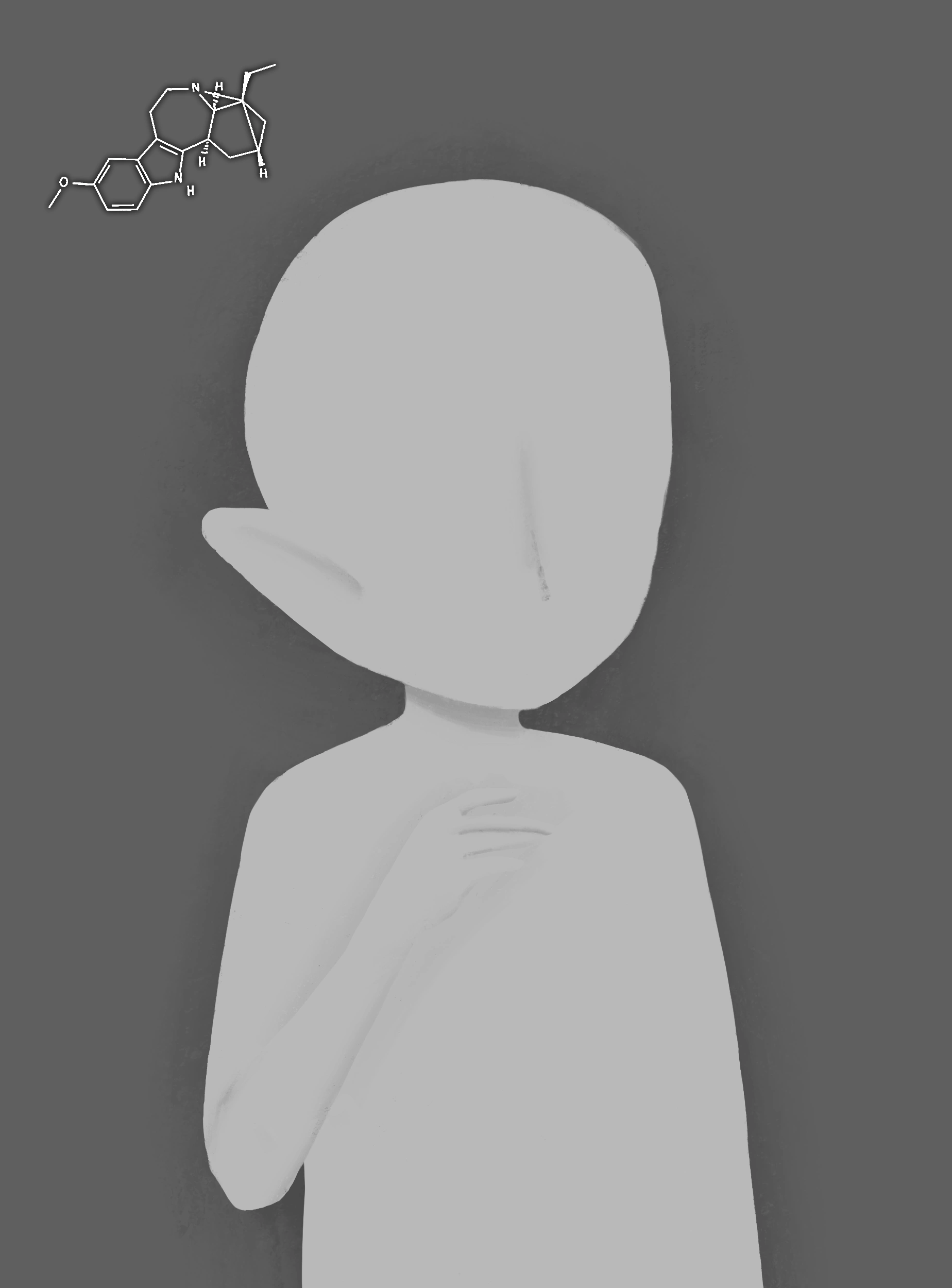 | |
| Molecule | C20H26N2O |
| Compound | Ibogaine |
| Era | Modern |
| Origin | Congo, Gabon |
| Archetype | Chicago Detroit |
| Ancestor | Gabon |
| Swag Score | 2 |
| Date Added | 2025-01-12 |
[view source]Effects & Properties
Effects: Ibogaine induces intense, long-lasting hallucinations, often described as dream-like or introspective visions. Physically it can increase heart rate and blood pressure, and may invoke nausea, vomiting, and tremors. Ibogaine is highly toxic at high dose with risks including cardiac arrhythmias and seizures.
Natural Occurrence: Found primarily in the root bark of Tabernanthe iboga, the plant grows in tropical rainforest and is harvested for its psychoactive and medicinal properties. Appearance: Tabernanthe iboga has dark green leaves, yellow, or white flowers, and brownish root bark. The root bark, when dried, appears as reddish-brown to dark brown fibrous material, often ground into powder for consumption.
[view source]History
Ibogaine was first isolated from Tabernanthe iboga root bark by French chemists Dybowsky and Landrin in 1901, following reports from French colonists in Gabon about the powerful psychoactive properties of the Bwiti religious sacrament. The Bwiti tradition, practiced by the Fang and Mitsogo peoples of Central Africa, uses iboga root bark in initiation rituals that can last several days and involve intense visionary experiences. In 1962, American heroin addict Howard Lotsof discovered ibogaine's remarkable anti-addiction properties, sparking decades of research into its use for treating opioid, cocaine, and alcohol dependence.
[view source]Connections
Archetype: Chicago Detroit
Ancestor: Gabon
Tarot Card: Knight of Cups
PubChem: Ibogaine
Paired With: Iboga, Tabernaemontana
[view source]Sources
- https://erowid.org/chemicals/ibogaine/ibogaine.shtml
- https://www.erowid.org/plants/iboga/iboga.shtml
- https://pubchem.ncbi.nlm.nih.gov/compound/Ibogaine
- Ibogaine - Wikipedia — molecular formula C20H26N2O, isolation by Dybowski and Landrin (1901), Tabernanthe iboga source, pharmacological profile
- Bwiti - Wikipedia — Bwiti spiritual tradition of the Fang and Mitsogo peoples of Gabon, iboga initiation rituals
- Howard Lotsof - Wikipedia — 1962 discovery of ibogaine anti-addiction properties
- The Anti-Addiction Drug Ibogaine and the Heart: A Delicate Relation (PMC) — cardiac arrhythmia risks, QT prolongation
- Anti-addiction drug ibogaine inhibits hERG channels (PubMed) — hERG channel inhibition and arrhythmia mechanism