
Grayanotoxin
| Grayanotoxin | |
|---|---|
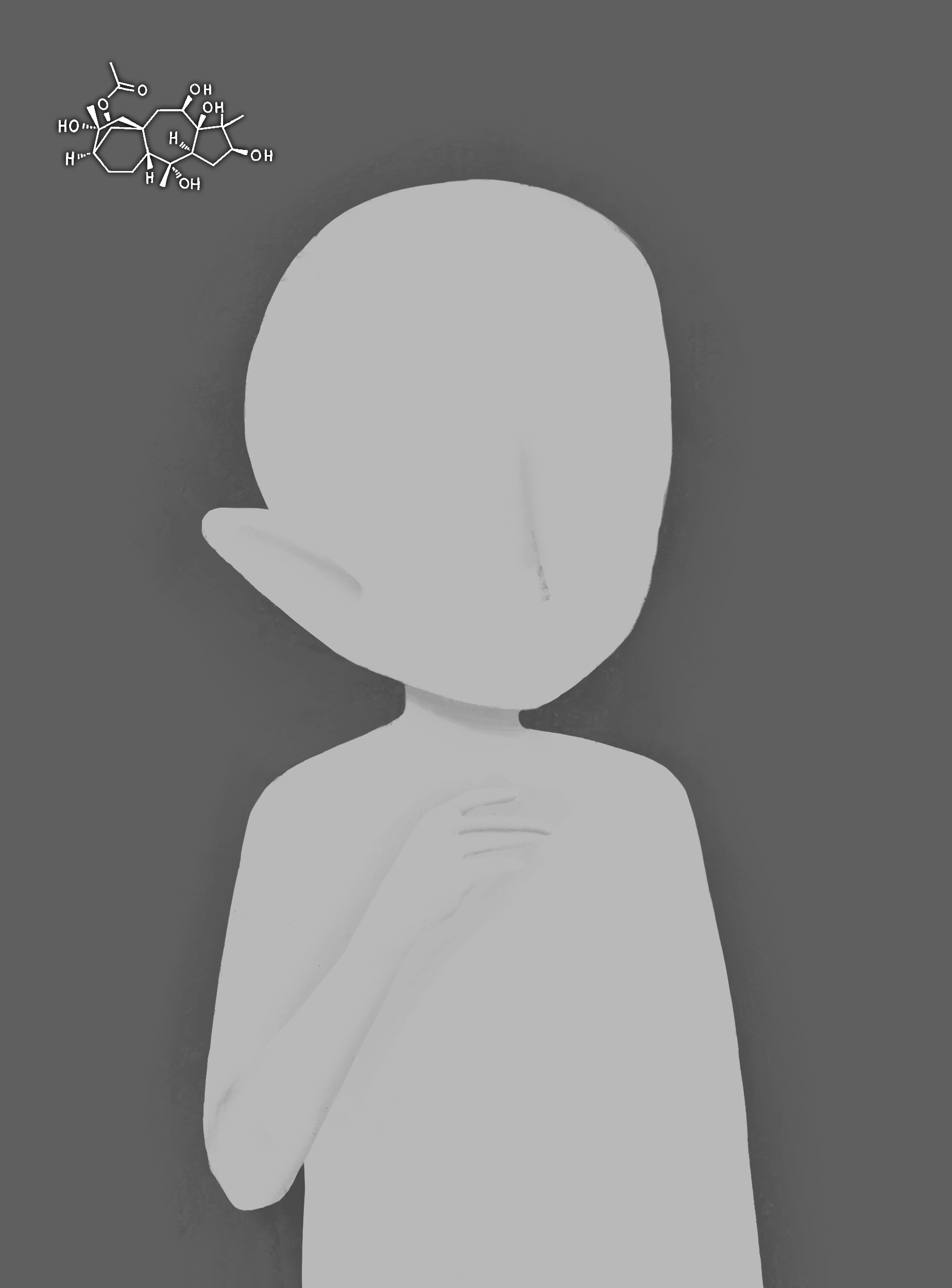 | |
| Molecule | C20H34O5 |
| Compound | Grayanotoxin |
| Era | Ancient |
| Origin | Turkey |
| Archetype | Milady |
| Ancestor | Nepal, Turkey |
| Swag Score | 1 |
| Date Added | 2025-01-12 |
[view source]Effects & Properties
Effects: Induces dizziness, confusion, and in higher doses, mild hallucinations or delirium.
Natural Occurrence: Traditionally used in Turkey and Nepal as mad honey for gastrointestinal issues, hypertension, pain relief, and as an aphrodisiac. Grayonotoxin I occurs naturally in Ericacae plants:
- Rhododendron Species: Present in leaves, flowers, nectar, and pollen.
- Mad Honey: Honey from bees collecting Rhododendron nectar contains grayanotoxins.
- Also found in other Ericaceae genera like Kalmia (mountain laurel), Leucothoe, Pieris, and Andromeda. Appearance: In Rhododendron it appears as evergreen leaves and colourful flowers (mainly purple and (or) yellow). Dried plant material is greenish-brown. In Mad Honey it appears as reddish-brown to amber liquid with a bitter, pungent taste, very distinct from regular honey due to its association with Rhododendron nectar.
[view source]History
Grayanotoxin-containing "mad honey" has been documented since antiquity, most famously by the Greek historian Xenophon around 401 BCE, who described Greek soldiers becoming delirious after eating honey in the Black Sea region of Turkey. The Roman general Pompey's troops were reportedly poisoned by locals using mad honey as a weapon in 67 BCE. Traditional use of Rhododendron-derived mad honey persists in Turkey's Black Sea region and Nepal's Himalayan cliffs, where Gurung honey hunters risk their lives to harvest it from giant bee colonies on cliff faces.
[view source]Connections
Archetype: Milady
Tarot Card: Six of Swords
PubChem: Grayanotoxin
Paired With: Ketamine
[view source]Sources
- https://pubchem.ncbi.nlm.nih.gov/compound/Grayanotoxin#section=SMILES
- Grayanotoxin - Wikipedia
- Mad honey - Wikipedia
- Grayanotoxin Poisoning: 'Mad Honey Disease' and Beyond (PMC)
- Mad honey: uses, intoxicating/poisoning effects, diagnosis, and treatment (PMC)
- Neurotoxins and Their Binding Areas on Voltage-Gated Sodium Channels (PMC)