
Euphoria
| Euphoria | |
|---|---|
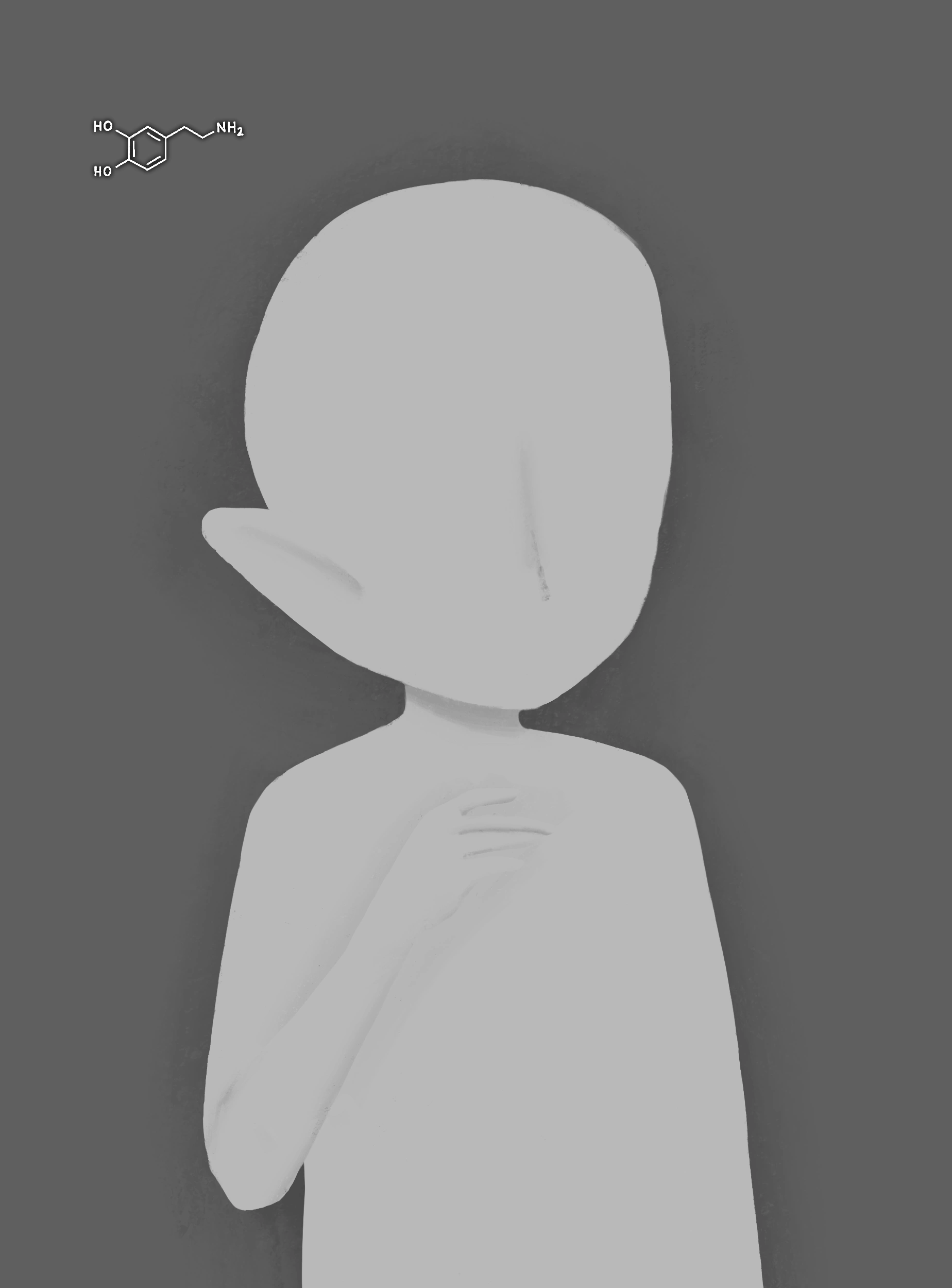 | |
| Molecule | C8H11NO2 |
| Compound | Dopamine |
| Era | Modern |
| Archetype | Chicago Detroit |
| Ancestor | Mongolian |
| Swag Score | 2 |
| Date Added | 2025-01-12 |
[view source]Effects & Properties
Effects: In the brain, dopamine mediates reward, pleasure, and motivation, contributing to feelings of satisfaction. It enhances focus, attention, and goal-directed behavior, particularly in the mesolimbic pathway. Physically, dopamine regulates blood pressure, heart rate, and kidney function by acting as a vasodilator or vasoconstrictor. Excessive dopamine can cause agitation, paranoia, or psychosis.
Natural Occurrence: In animals, dopamine regulates neurological and physiological processes, In plants, its role is less clear but may involve defense or signaling. It is an endogenous compound, not requiring external administration for natural effects.
- Animal: Synthesized in the brain, adrenal glands, and peripheral tissues from the amino acid L-tyrosine via tyrosine hydroxlase. It is found in high concentration in the substantia nigra, ventral tegmental area, and basal ganglia, playing a role in movement, reward, and cognition. It is also present in blood and kidneys.
- Plants: Found in certain plants, notably bananas (Musa species) and Mucuna pruriens (velvet beans), where it may function in stress responses or as a precursor to other compounds. Concentrations in plants are low and not psychoactive when consumed due to metabolism and blood-brain barrier. Appearance: In nature, dopamine is not visible as it exists in trace amounts within tissues or fluids. In its pure form, dopamine is a white to off-white crystalline powder.
[view source]History
Dopamine was first synthesized in 1910 by George Barger and James Ewens at the Wellcome Laboratories in London, and its role as an independent neurotransmitter was established by Arvid Carlsson in 1958. The discovery of the mesolimbic dopamine pathway, often called the brain's "reward circuit," revealed how dopamine mediates pleasure, motivation, and the experience of euphoria itself. This endogenous system is what every recreational drug ultimately targets, making natural dopamine release through exercise, music, dance, and social bonding the original and most ancient form of euphoria, central to the communal ecstasy of Mongolian throat singing, Detroit house music, and Chicago warehouse parties alike.
[view source]Connections
Archetype: Chicago detroit
Ancestor: Mongolian
Tarot Card: Six of Wands
PubChem: Dopamine
Paired With: Sober