
Caffeine
| Caffeine | |
|---|---|
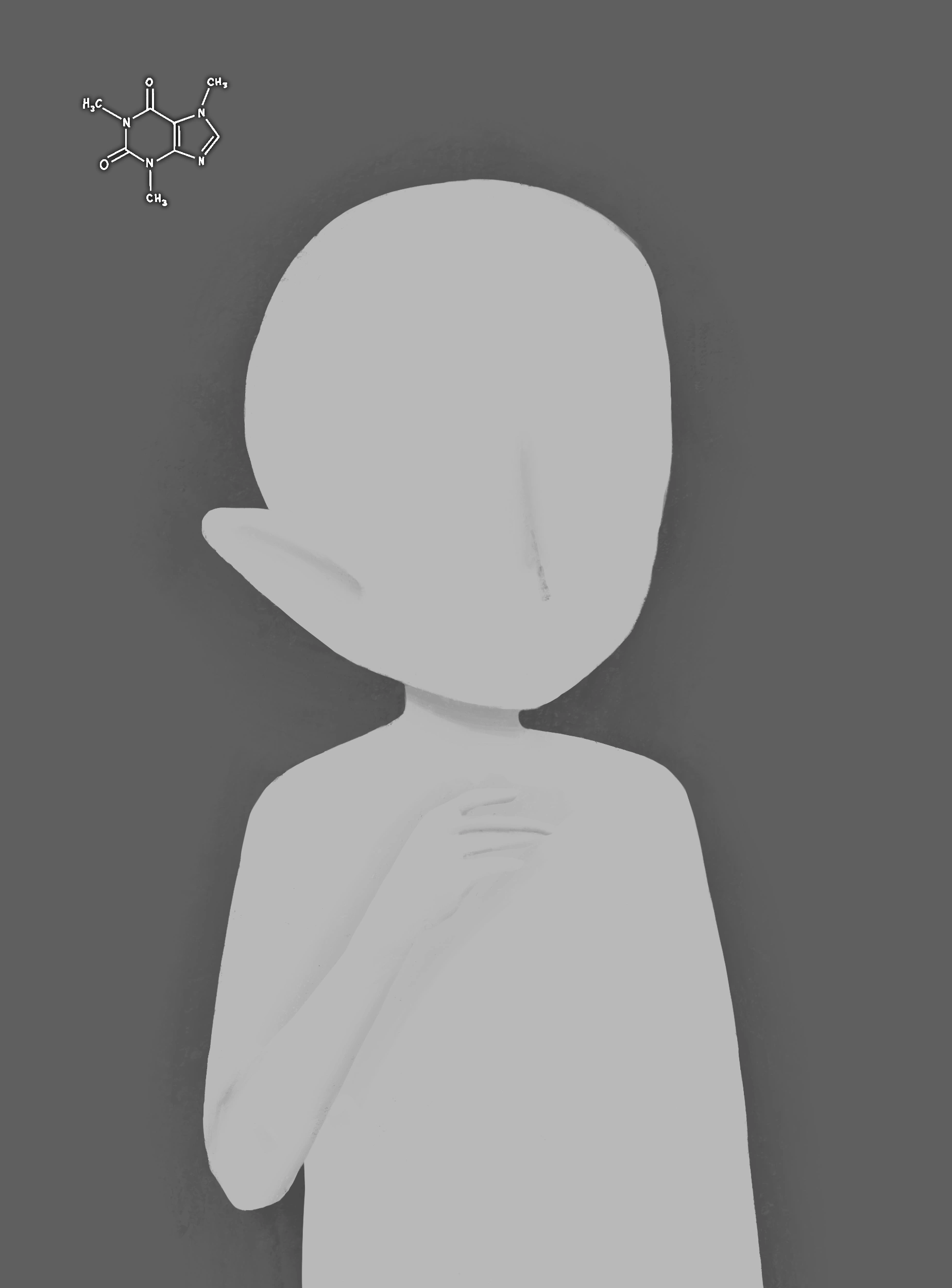 | |
| Molecule | C8H10N4O2 |
| Compound | Caffeine |
| Era | Modern |
| Origin | Ethiopia, China, Mesoamerica |
| Archetype | Milady |
| Ancestor | Ethiopian, Arabs, Traveller, Chinese, Japanese |
| Swag Score | 2 |
| Date Added | 2025-01-12 |
[view source]Effects & Properties
Effects: Enhanced alertness, improved focus, mild euphoria, and reduced sleepiness. It can improve cognitive performance and reaction time in low to moderate doses (50-200mg). Physically it can increase heart rate, elevate blood pressure, mild diuresis, and in some cases jitteriness or tremors.
Natural Occurrence: Caffeine is synthesized by plants as a secondary metabolite to protect against insects and pathogens. It is present in seeds, leaves, and fruits, with concentrations varying by species and environmental factors.
Coffee beans contain 1-2% caffeine by weight.
Tea leaves contain 2-5% caffeine varying by type.
Cocoa beans contain small amounts of caffeine alongside theobromine.
Found also in other plants such as kola nuts, guarana, and yerba mate. Appearance: In coffee beans, it is part of a dark brown, roasted seed matrix; in tea it is in dried green or black leaves, in guarana it is in reddish seeds. These forms are not pure caffeine but contain it as a component.
[view source]History
Caffeine consumption likely began in Ethiopia, where legend attributes the discovery of coffee to a goat herder named Kaldi around the 9th century CE who noticed his goats became energized after eating coffee berries. Tea consumption in China dates back even further, traditionally to Emperor Shen Nung around 2737 BCE. Coffeehouses became vital centers of intellectual and political discourse in the Ottoman Empire, Europe, and colonial America, and caffeine is now the most widely consumed psychoactive substance on Earth, with over two billion cups of coffee consumed daily worldwide.
[view source]Connections
Archetype: Milady
Ancestor: Ethiopian, Arabs, Traveller, Chinese, Japanese
Tarot Card: The Sun
PubChem: Caffeine
[view source]Sources
- https://www.erowid.org/chemicals/caffeine/caffeine.shtml
- https://www.britannica.com/science/caffeine
- https://pubchem.ncbi.nlm.nih.gov/compound/Caffeine
- Caffeine - Wikipedia — molecular formula C8H10N4O2, methylxanthine alkaloid classification, most widely consumed psychoactive substance, plant defense metabolite role, caffeine content in coffee beans and tea leaves
- Kaldi - Wikipedia — legend of the Ethiopian goat herder and coffee discovery (~9th century CE)
- History of tea in China - Wikipedia — Emperor Shen Nung legend (2737 BCE)
- History of coffee - Wikipedia — coffeehouses in the Ottoman Empire and Europe, global spread of coffee culture