
Mibera #4363
| Mibera #4363 | |
|---|---|
| Grail | Japanese |
| Grail Category | ancestor |
| Parcel | 4363 |
Grail #4363 · Ancestor · Japanese
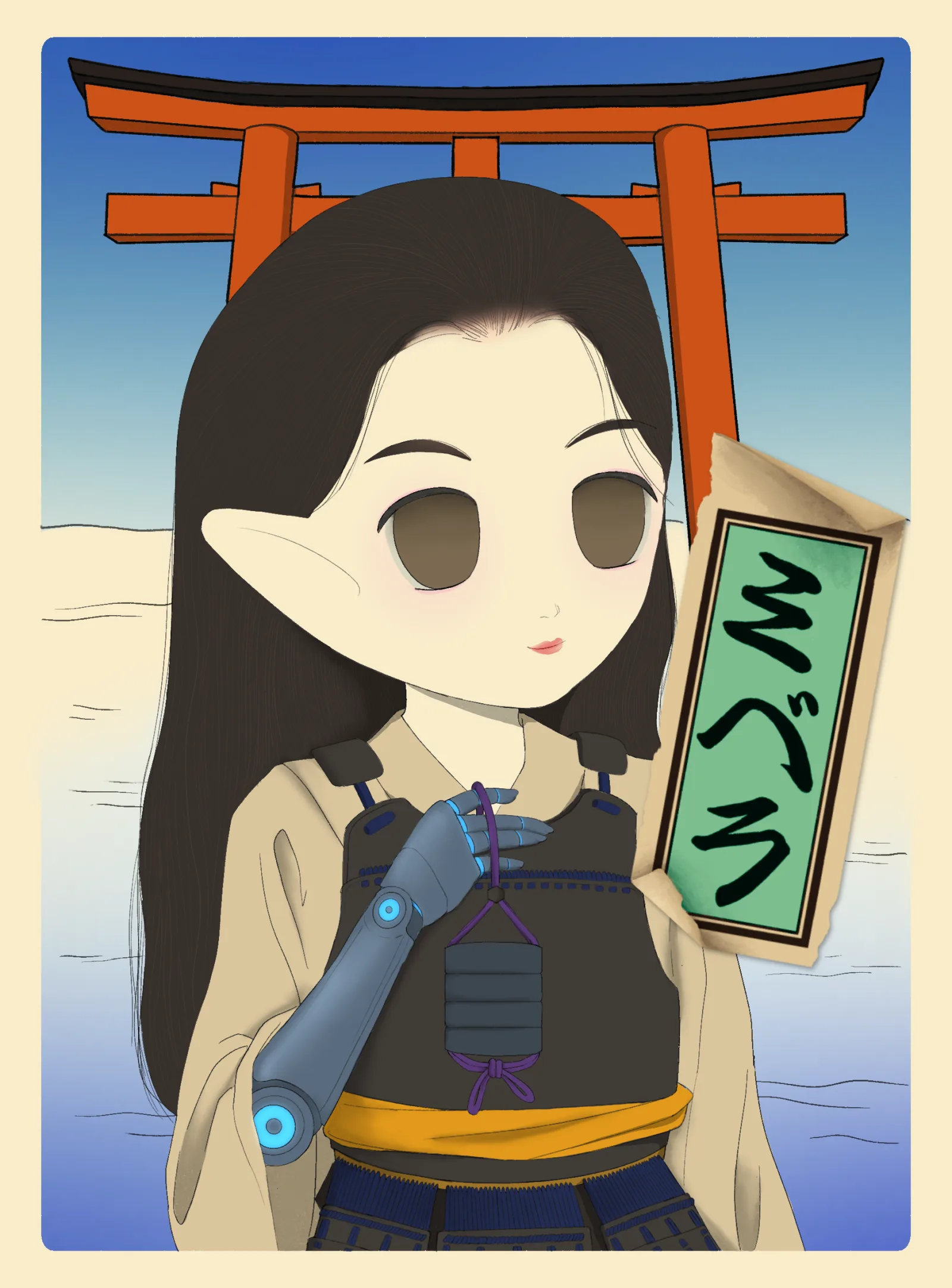
This grail was placed on a random Mibera post-reveal.
[view source]Reveal Timeline
The original generative Mibera that this grail was placed on post-reveal.
| MiParcels | Miladies | #1.1 | #2.2 | #3.3 | #4.20 | #5.5 | #6.9 | #7.7 |
|---|---|---|---|---|---|---|---|---|
 |
 |
 |
 |
 |
 |
 |
 |
 |
Original Mibera (Phase 8)

Ukiyo-e style with inro, torii gate, and mibera senjafuda
[view source]Cultural Context
Ukiyo-e ("pictures of the floating world") is a genre of Japanese woodblock prints produced from the 17th through 19th centuries. Inro are decorative Japanese containers traditionally carried at the waist to hold medicines and personal seals. Torii gates mark the transition from the mundane to the sacred at Shinto shrines. Senjafuda are name stickers that visitors traditionally post at temples and shrines.
[view source]Visual Elements
Ukiyo-e inspired art style. Holding an inro. Torii gate in the background. Senjafuda that says "mibera" on top of the piece.
[view source]Justification
Ancestors are a load-bearing trait in the Mibera system — each of the 10,000 Miberas inherits an ancestor as their cultural lineage. The ancestor grails represent each lineage as its own identity.
Parcel: MiParcel #4363